
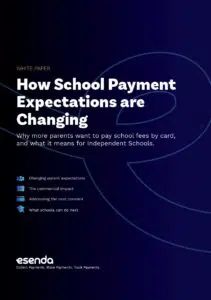
Independent schools are facing growing pressure to balance financial sustainability with an increasingly demanding parent experience. A new whitepaper from esenda explores an often-overlooked area that is becoming strategically important: how parents want to pay school fees.
The report highlights a significant shift in parent expectations, driven by the wider digital economy. Families are now accustomed to flexible, secure, and convenient payment experiences in almost every aspect of daily life, from travel bookings to major purchases. As a result, traditional school payment methods can feel increasingly restrictive.
According to the whitepaper, schools are seeing a marked rise in requests for card payments, with parents citing greater cashflow flexibility, convenience, rewards programmes, and enhanced security as key motivations. The research suggests that payment flexibility can help reduce financial friction, improve parent satisfaction, and even support enrolment by making independent education feel more accessible.
Importantly, the paper argues that offering additional payment options need not come at the expense of financial control. A layered approach, combining Direct Debit with card and longer-term finance options, can provide schools with predictable cashflow while giving families greater choice.
The whitepaper also examines the economics behind payment flexibility, concluding that the cost of offering card payments is often modest when viewed against the potential value of improved enrolment, retention, and parent experience.
Download the full whitepaper to discover how payment flexibility is becoming a strategic consideration for independent schools and what practical steps schools can take to respond to changing parent expectation.
Categories: Uncategorised