The Government’s announcement that oracy will become a core part of the National Curriculum from 2028 signals a major shift in education. For many schools, it represents a new direction. But for others, it is a long-overdue recognition of something they have championed for decades: that the ability to speak, listen and communicate effectively is fundamental to success in school, work and life.
At Moreton Hall, oracy has long been a cornerstone of a well-rounded education. Since 1953, pupils have developed their spoken communication skills through the English Speaking Board framework—embedding confidence, clarity and critical thinking at the heart of school life. As national policy evolves, the school’s long-standing commitment places it firmly ahead of the curve.
A national moment for spoken language
The Government’s plans reflect a growing consensus among educators and employers alike: speaking and listening are not “soft skills”—they are essential skills. Research from Oracy Cambridge highlights that oracy underpins academic achievement, supports wellbeing, and plays a crucial role in shaping young people’s prospects.
In the modern workplace, these skills are more important than ever. Employers consistently rank communication, collaboration and the ability to articulate ideas clearly among the most sought-after attributes. Oracy Cambridge’s work emphasises that strong spoken language skills are closely linked to employability, enabling young people not only to access opportunities but to thrive within them. As automation and artificial intelligence reshape industries, it is these human capabilities—persuasion, empathy, and reasoning—that provide a lasting competitive edge.
More than speaking: a foundation for learning
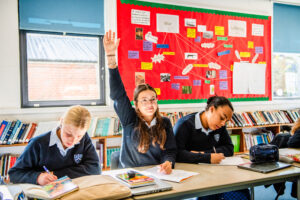
Oracy sits at the heart of learning itself. When pupils are encouraged to articulate their ideas, engage in discussion, and present their thinking, they deepen their understanding across all subjects. The classroom becomes a dynamic space—not just for absorbing knowledge, but for exploring it, challenging it and making it their own.
Oracy builds confidence. Speaking clearly and being heard empowers young people to contribute, lead, and express themselves with clarity and purpose. That confidence carries beyond the classroom, shaping how pupils approach interviews, university applications and future careers.
Preparing pupils for a complex world
Oracy plays a vital role in developing critical thinking. Through structured discussion and debate, pupils learn to evaluate competing perspectives, construct arguments and challenge
assumptions. They learn to listen actively and respond thoughtfully—skills that are essential in an increasingly complex and interconnected world.
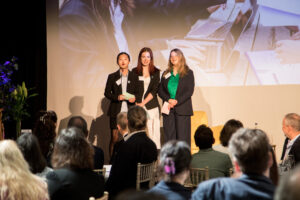
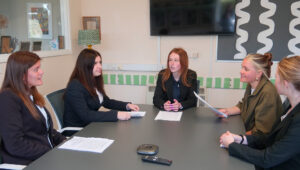
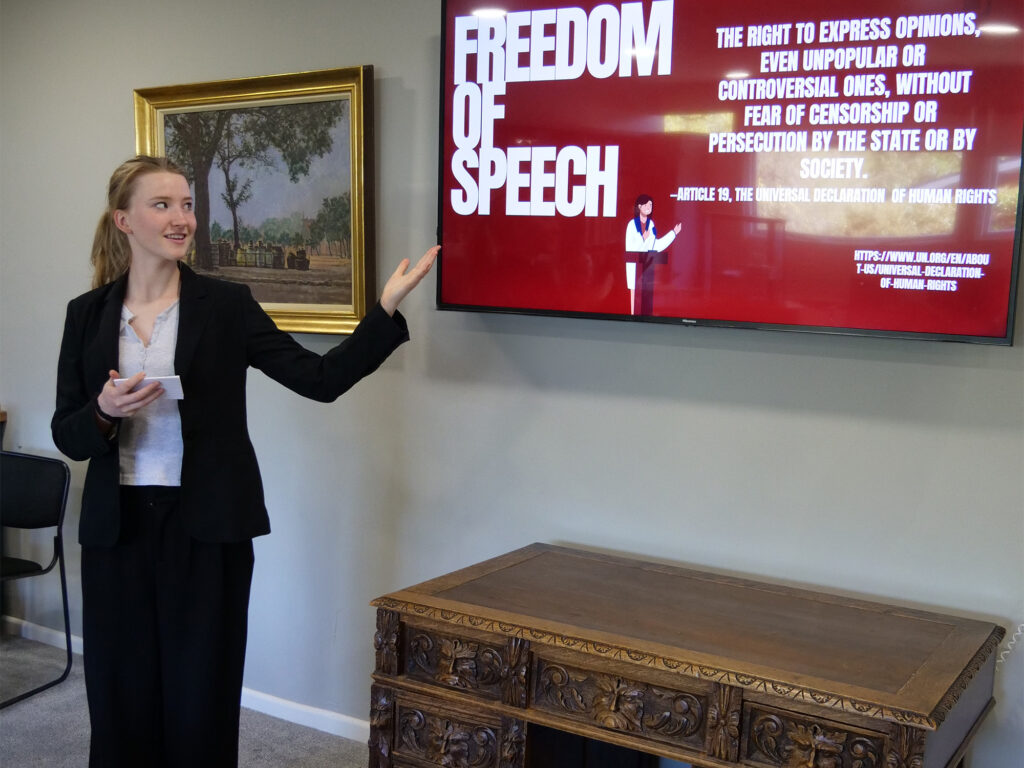
At Moreton Hall School in Shropshire, these skills are brought to life through ambitious, real-world topics within the Grade 8 English Speaking Board Assessment in Speech. This year, Lower Sixth students explored issues such as the impact of artificial intelligence on the music industry, the ethics of genetic modification, and the boundaries of social media marketing. These are not simple conversations—but they are exactly the kind of discussions that prepare young people to engage critically and confidently with the world around them.
Excellence in action
The impact of this sustained focus on oracy is clear—and it begins early. Pupils at School X undertake English Speaking Board assessments from as young as Year 1, building confidence and communication skills progressively throughout their school journey.
Oracy is not confined to occasional assessments; it is embedded in the school’s culture. In the Prep School, pupils compete each year for a coveted oracy trophy, celebrating clarity of speech, creativity and confidence. As pupils move into senior years, the ESB framework is fully integrated into Key Stage 3 English, ensuring that spoken language development sits alongside reading and writing as a core academic discipline.
Beyond the classroom, opportunities to perform and present are woven into school life. Whole-school poetry slams have become a highlight of divisional competitions, with pupils not only performing but actively supporting and encouraging one another—often sharing powerful, self-composed work. From Year 1 to Year 11, students also participate in Speech and Drama festivals, developing confidence in front of a wider audience while building the discipline and resilience that performance requires.
These experiences culminate in exceptional outcomes. In the most recent English Speaking Board assessments, every pupil entered for Grade 5 achieved a Distinction. At Grade 8, 24 out of 26 Lower Sixth students were awarded Distinction, with the remaining two achieving Merit.
These results reflect more than academic success. They point to a culture in which pupils are encouraged to think deeply, speak confidently and listen with respect—qualities that will serve them throughout their lives.
Leading the way in a national movement
As the country prepares to introduce a new oracy-focused curriculum, Moreton Hall stands as a powerful example of what can be achieved when spoken language is treated as a core entitlement rather than an optional extra.
The Government’s reforms are both welcome and necessary. But they also highlight a simple truth: schools that invest in oracy are not just improving outcomes—they are transforming lives.
Because oracy is, ultimately, about more than communication. It is about confidence. It is about opportunity. And, most importantly, it is about giving every child a voice—and ensuring they know how to use it.
Sarah Pritchard
Head of Spoken English
Moreton Hall School, Shropshire