
Future Education Symposium brings together leading voices from education, business and government to explore how schools can equip young people with the curiosity, resilience and adaptability needed to thrive in an AI-driven world.
Leading voices from education, business and government gathered at Haberdashers’ Monmouth School yesterday evening to tackle one of the most significant questions facing schools today: how do we prepare young people for a future we cannot yet predict?
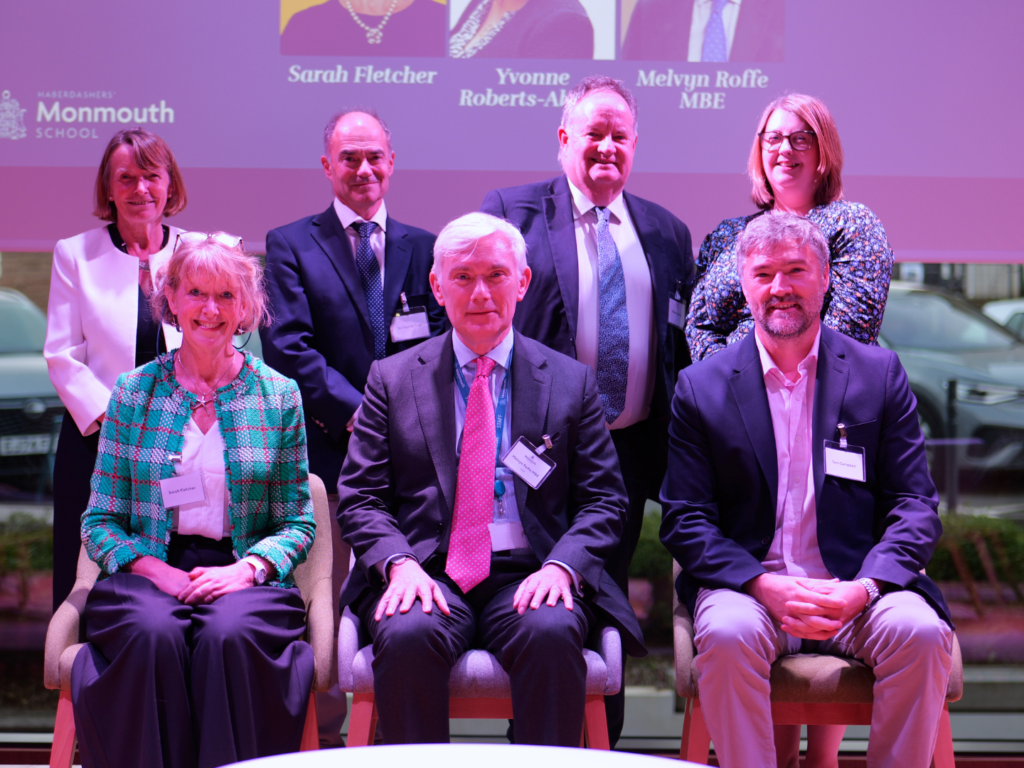
The school’s inaugural Future Education Symposium brought together an expert panel including former Rolls-Royce CEO Sir Warren East, former President of Trinity College Oxford Dame Hilary Boulding, Welsh Government curriculum leader Yvonne Roberts-Ablett, E-ACT CEO Tom Campbell, former Haileybury Master Martin Collier, former St Paul’s Girls’ School High Mistress Sarah Fletcher and Haberdashers’ Monmouth School Headmaster Melvyn Roffe.
The discussion ranged from artificial intelligence, changing career pathways and university admissions to teacher recruitment, literacy, curiosity and the future skills employers are seeking.
A recurring theme was that while technology continues to transform the workplace, human qualities remain more important than ever. Speaking from an employer’s perspective, Sir Warren East argued that schools should focus not only on knowledge and qualifications but on developing initiative, curiosity, resilience and collaboration. He emphasised that employers are looking for “human beings, not machines”.
The panel also questioned whether increasingly content-heavy curricula are equipping young people for a rapidly changing world. Sarah Fletcher highlighted concerns that education can become overly focused on assessment and “teaching to the test”, leaving too little room for creativity, collaboration and independent thinking.
Student questions formed an important part of the evening. When Year 12 student Katie asked what advice the panel would give young people about the future, panellists urged optimism. Tom Campbell suggested that adults often project anxieties onto younger generations, while Sir Warren East encouraged students to focus on the opportunities a changing world will create.
The discussion also explored how schools can foster curiosity and a love of learning. Melvyn Roffe argued that young people are naturally curious and that education must create space for exploration and creativity rather than simply “boxing knowledge”.
Questions from students and parents covered topics including degree apprenticeships, the future of universities, leadership opportunities, community engagement and how schools can better prepare pupils for careers that do not yet exist. Panellists agreed that adaptability, confidence and the ability to keep learning will be essential attributes for future success.
The event attracted parents, educators, students and business leaders from across the region and forms part of Haberdashers’ Monmouth School’s commitment to ensuring young people are not only academically successful, but future-ready in an increasingly complex world.